Shigeta's Dream: The Gachafication of Everything
Originally published on X ↗
Ryuzo Shigeta wanted to create a better version of the American vending machine. He ended up making every modern consumer application a casino.
One of the most telling moments in fintech happened quietly this year, and most people missed it entirely. Let me explain.
When Robinhood launched their Gold Credit Card mystery boxes, the financial media treated it like just another rewards program gimmick. A few tech blogs mentioned the "gamification" angle. Some regulatory wonks raised eyebrows about the disclosed odds. But what they all missed was the deeper story: we just witnessed the moment that a 60-year-old Japanese psychology hack officially conquered American finance.

Those mystery boxes aren't just rewards. They're gacha. And if you don't know what that means yet, you're about to understand why every app on your phone is slowly becoming a slot machine.
I've been watching as the mechanics that made mobile games into $15 billion-a-year dopamine dealers quietly spread into everything from your banking app to your language learning streak. What started as a way to sell plastic toys in Tokyo vending machines has become the dominant engagement model of the digital economy. And most people have no idea it's happening.
The gachafication of everything isn't just changing how we spend money—it's rewiring how we think about reward, risk, and the very nature of value itself.
The Accidental Psychology Experiment That Started It All
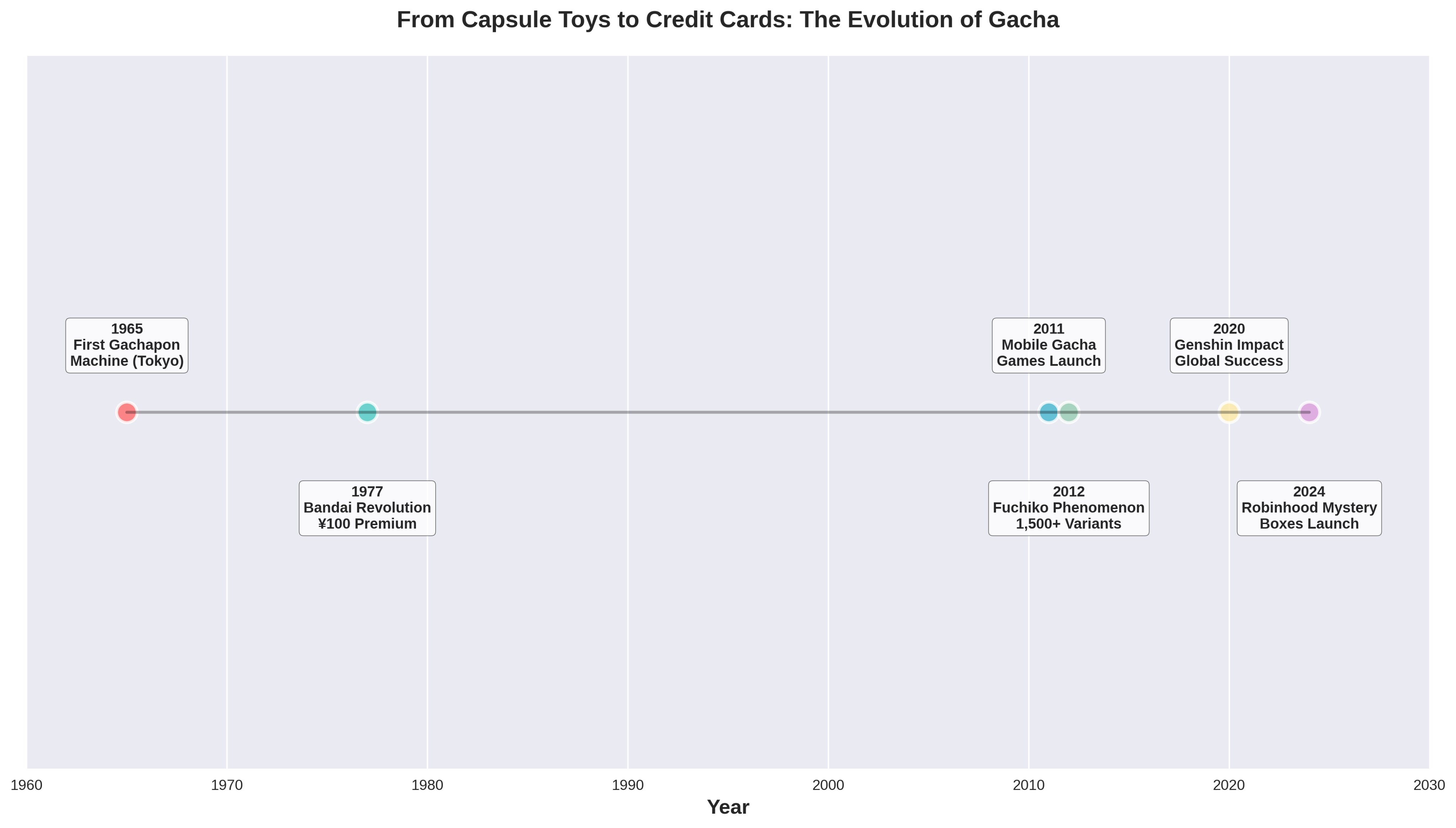
To understand how we got here, you need to go back to 1965 Tokyo, where an entrepreneur named Ryuzo Shigeta was staring at an American vending machine and thinking it could be better. The machine dispensed candy and cheap toys at random, but Shigeta found the experience unsatisfying—messy, unpredictable, anticlimactic. His solution was elegantly simple: wrap each prize in a plastic capsule, add some ceremony to the reveal, and suddenly you've transformed a mundane transaction into a moment of genuine suspense.
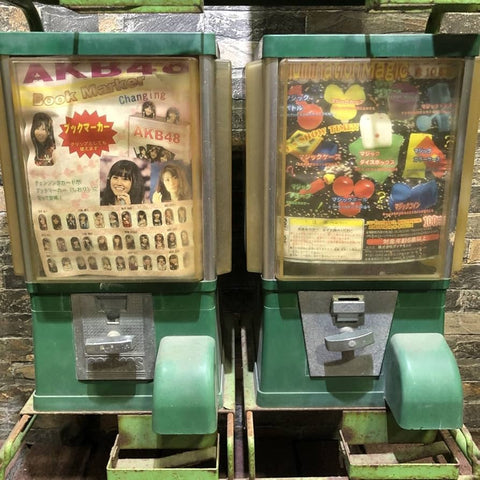
The first gachapon machine (named for the "gacha-gacha" sound of the turning crank and the "pon" of the capsule dropping) was born not from some grand plan to manipulate human psychology, but from a desire to make vending machines feel more premium. What Shigeta accidentally created was the perfect circumvention of traditional gambling regulations—it wasn't technically gambling because you always got something, even if it wasn't what you wanted.
The genius of gacha wasn't immediately obvious. For over a decade, these machines dispensed cheap toys for pocket change, mostly appealing to children hanging around sweet shops. But in 1977, toy giant Bandai revolutionized the entire concept by doing something counterintuitive: they made gacha ten times more expensive. Their new "Gashapon" machines charged ¥100 instead of ¥10, but the prizes were tied to popular franchises like Kamen Rider and Ultraman. Suddenly, adults were playing too.
- Brand attachment and collection psychology
- Social currency of rare items
- Completing sets drove repeat purchases
The psychology was perfect: high enough stakes to feel meaningful, low enough to seem harmless
The transition from physical capsules to digital gacha happened gradually, then all at once. Japanese mobile games began experimenting with virtual gacha mechanics in the early 2000s, but the real breakthrough came in 2011 when smartphone games discovered they could replicate the exact same psychological triggers in digital form. The digital format removed every friction point that limited physical gacha:
- No need for physical machines
- No inventory constraints
- No geographic limitations
- No limit on spending per session
The $15 Billion Proof of Concept
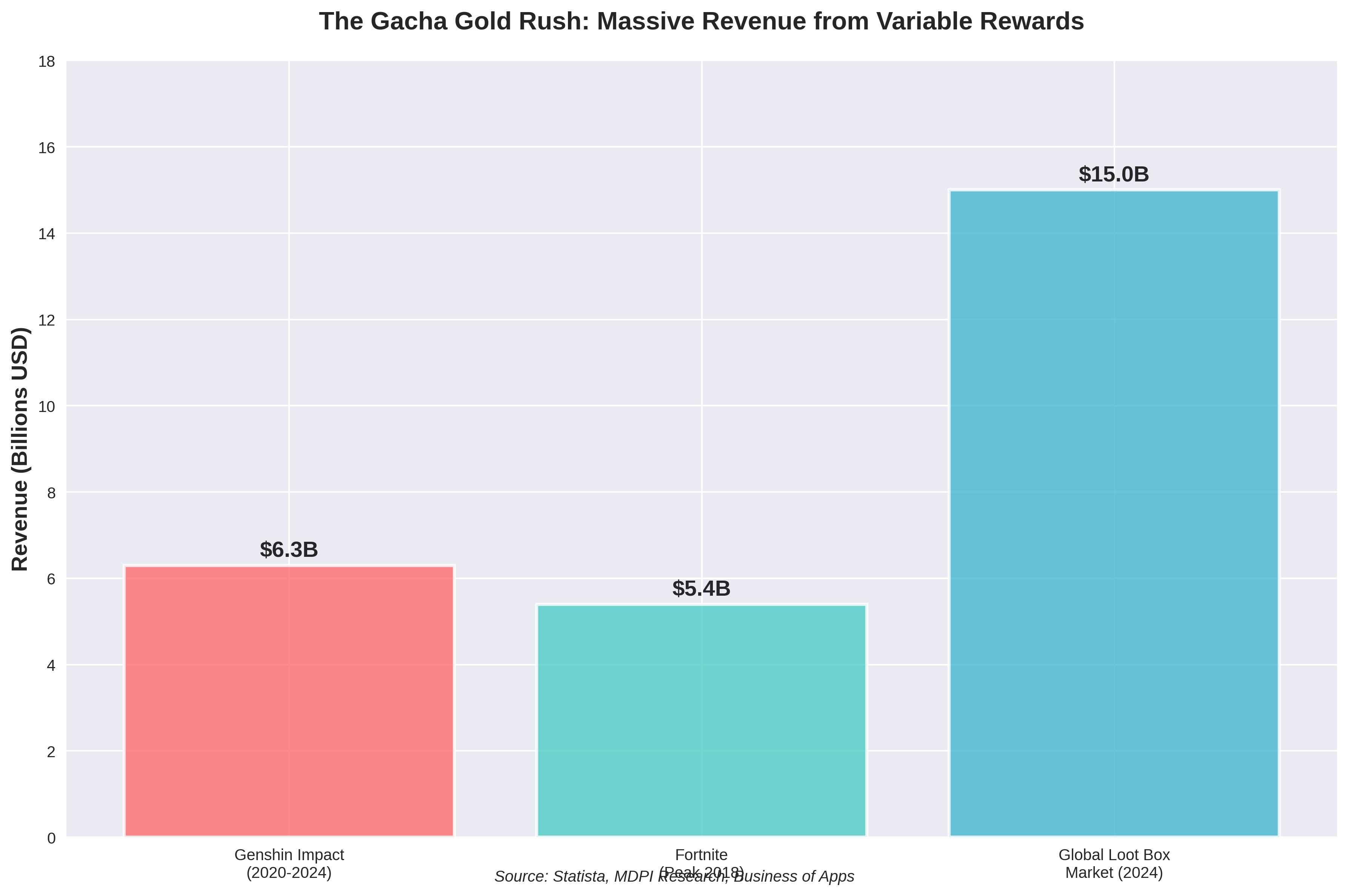
Those revenue numbers Shigeta never could have imagined became the foundation of modern digital economics. Genshin Impact, launched in 2020, became the fastest gaming app in history to reach $5B in global player spending due to its gacha mechanics. It generates over 27 million per month just from mobile in-app purchases (not including PC). Fortnite peaked at $5.4 billion in annual revenue through variable reward systems—limited-time cosmetics, battle pass progression, and seasonal loot mechanics.
The broader loot box market generates $15 billion annually, with:
- 90% of revenue from high-spending "whales"
- Users spending thousands monthly chasing rare items
- 3-5x higher lifetime value than traditional purchasers
People will pay far more for the possibility of getting something amazing (at almost any odds) than they will for the certainty of getting something good. Traditional video games followed a simple model: pay once, play forever. But gacha games discovered that variance itself is a product—you don't need better rewards, just unpredictable ones.
Why Your Brain Can't Resist the Unknown
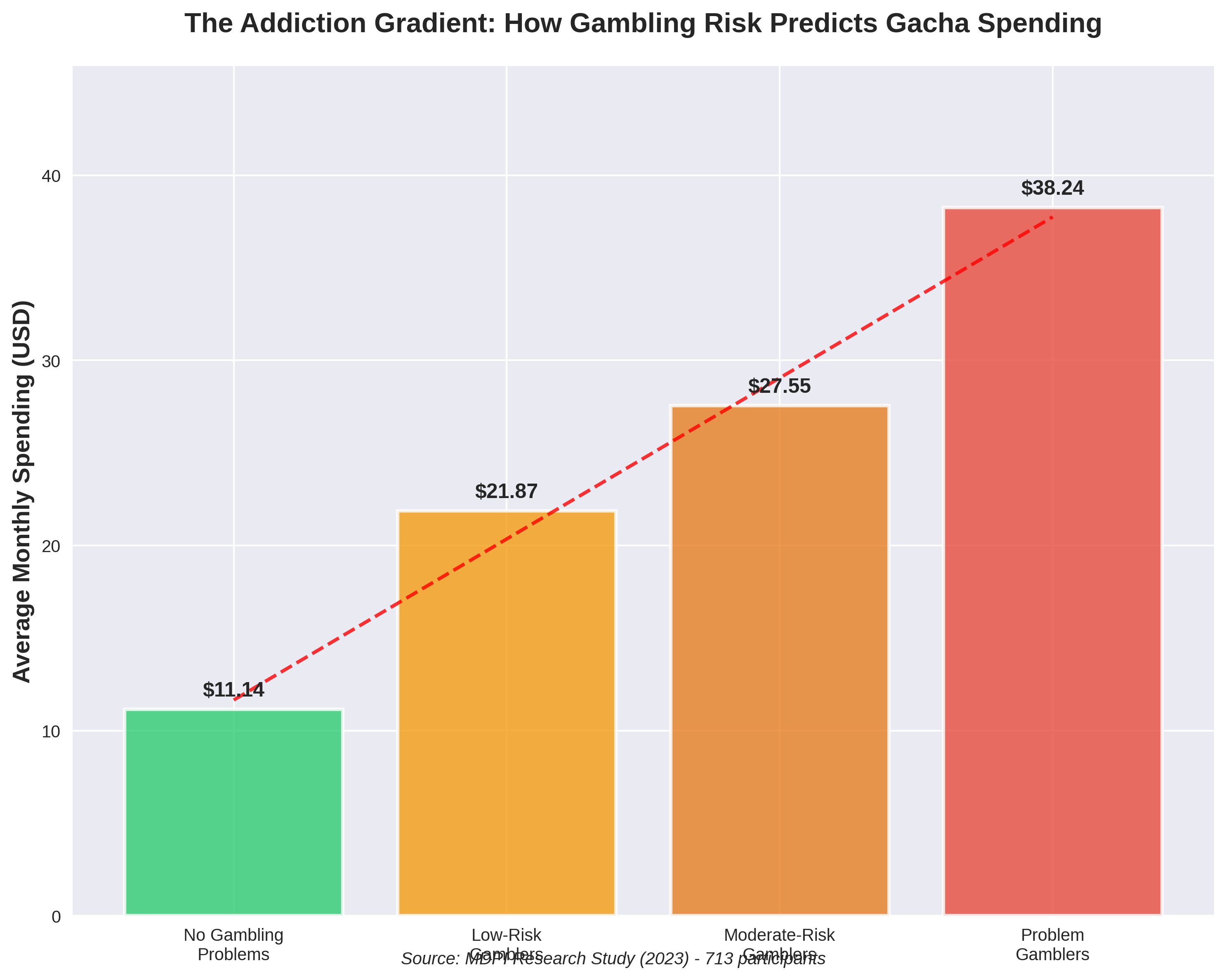
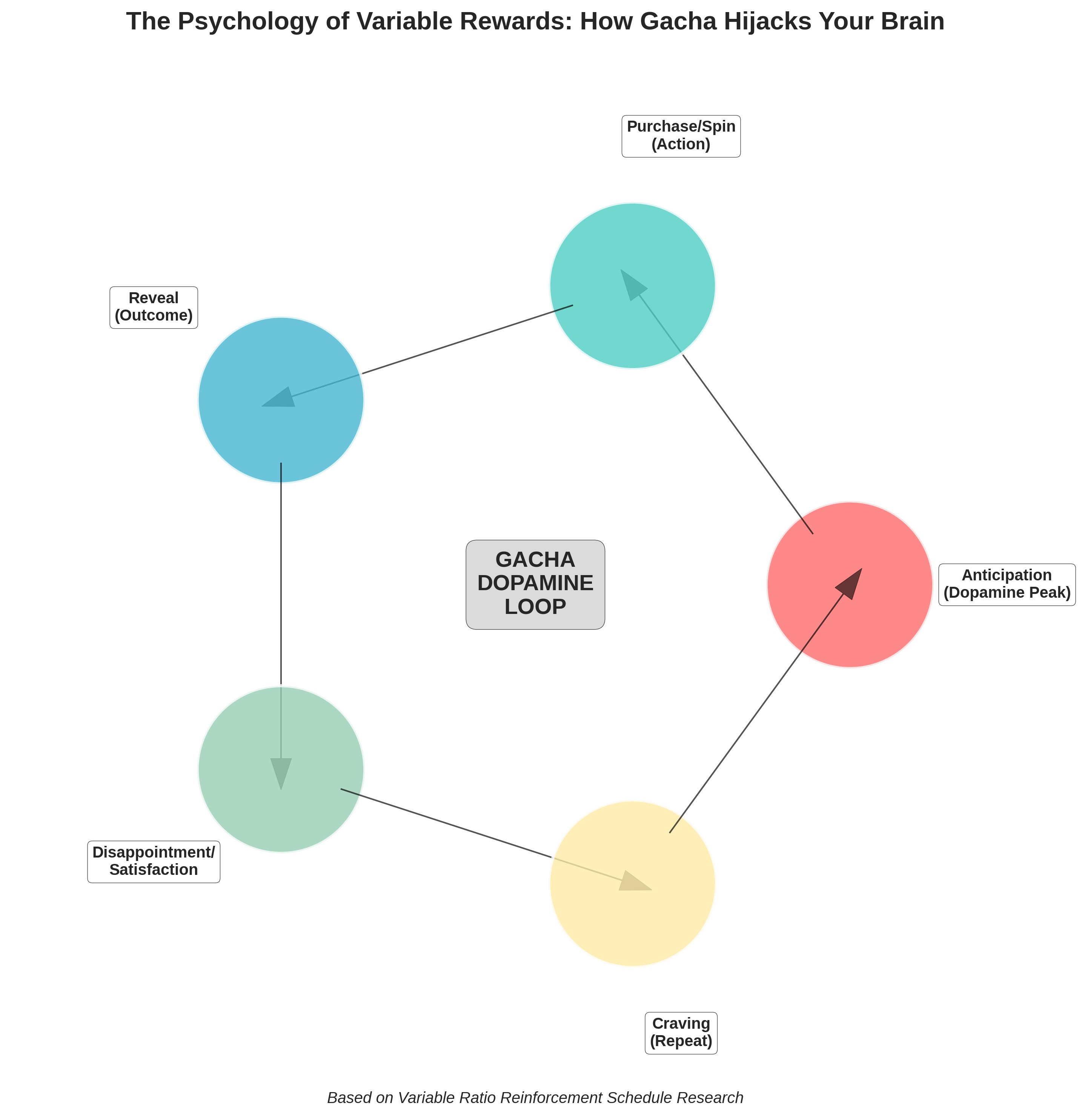
Gacha systems operate on "variable ratio reinforcement schedules"—the same pattern that makes gambling addictive. Unlike fixed rewards, variable rewards trigger dopamine during anticipation, not reward. Research on 713 gacha players found direct correlation between gambling risk and spending:
- Problem gamblers: $38.24/month
- Moderate-risk gamblers: $27.55/month
- Low-risk gamblers: $21.87/month
- No gambling problems: $11.14/month
Variance is inherently fun because uncertainty generates genuine surprise in adult brains. As we age, life becomes predictable. Gacha mechanics exploit this by creating pockets of genuine uncertainty in controlled environments.
The Great Escape: How Every Industry Became a Casino
Once companies realized variable rewards generate more engagement than fixed rewards, the race was on to implement gacha everywhere. The system solves multiple problems: increases engagement, creates recurring revenue, and avoids gambling regulations.
Financial Services: Banking as Entertainment
- Robinhood's mystery boxes: Users earn points through spending, redeem for randomized rewards with disclosed odds. Helps enable speculation on the underlying cashback rewards, and potential upside of variance in rewards makes Gold more engaging.
- Revolut and Current: Similar systems turning routine banking into gacha experiences.
Wellness & Education: Gamifying Self-Improvement
Social Media & E-Commerce: Monetizing Uncertainty
- LINE's Lucky Box stickers: Mystery packs vs. direct purchases generate 2.5x more revenue per user for one of the largest messaging apps in Korea/Japan
- Shopee's Lucky Draws: Accumulated points for random rewards. Results: 45% higher purchase frequency, 30% higher average order values
- Taobao/Tmall: Always-on gacha-like games tied to shopping activity rewards show 25% higher lifetime value and 40% better retention.
Adult Entertainment: Premium Uncertainty
Even something like dating apps (i.e. Hinge, Tinder, etc.) can be seen as a gacha for the next potential match (cc @justoutquan). I could go on and on but you get the gist.
The Universal Playbook
Here's what gachafication looks like across industries:
Core Mechanics:
- Earn through engagement (points/tokens from platform usage)
- Spend on uncertainty (currency for randomized rewards)
- Variable value delivery (common/rare/ultra-rare tiers)
Psychological Triggers:
- FOMO amplification through limited-time rewards
- Collection psychology driving completion behaviors
- Social proof via rare item status symbols
- Sunk cost escalation protecting previous investment
Business Benefits:
- Significant increases in user engagement
- Multiples on average spending per user
- Dramatically improved retention rates
- Regulatory arbitrage avoiding gambling definitions
What This Means
The gachafication of everything is rewiring how we experience reward and satisfaction in digital environments. When your banking app, fitness tracker, and social media all use variable rewards, the cumulative effect on behavior is profound. We're training ourselves to expect uncertainty from routine activities and find fixed rewards boring. More specifically, we have:
- A new generation growing up expecting chance/surprise in digital interactions
- Baseline shifting from "useful" to "exciting"
- Preference for uncertainty over certainty becoming normalized
- Fixed reward systems feeling increasingly inadequate
This reveals something about human nature we've been reluctant to acknowledge. Gacha's success suggests we fundamentally prefer uncertainty to certainty, possibility to guarantee. We're not being manipulated into foreign behaviors—we're being offered digital versions of experiences we've always craved.
The trajectory from Shigeta's improved vending machine to Robinhood's mystery boxes seems inevitable. We've always been drawn to the unknown, willing to pay for possibility, excited by getting more than expected. Technology didn't create these desires—it made them infinitely scalable and remarkably profitable.
Welcome to Shigeta's Dream.